
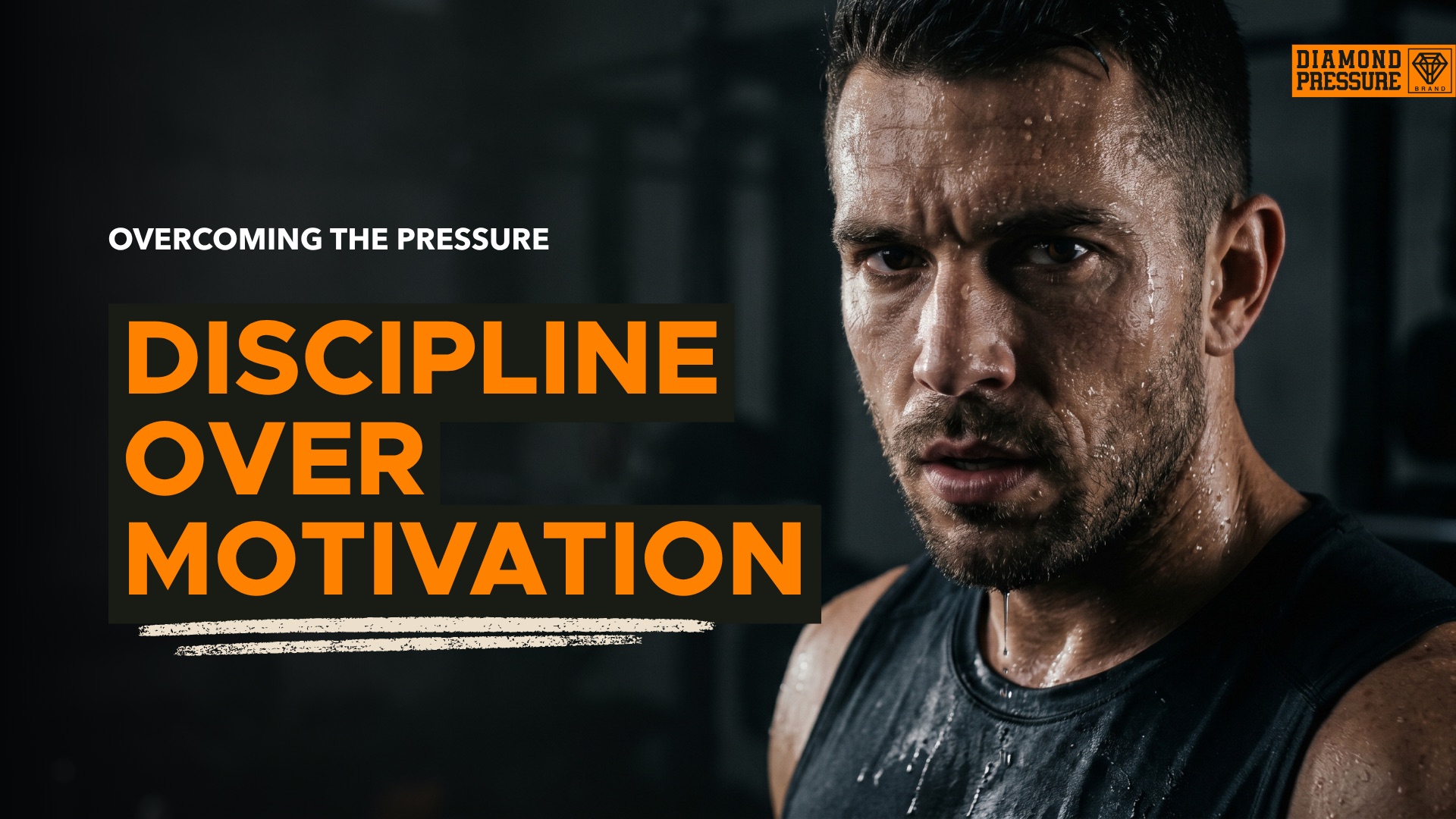
Motivation is useful when it shows up. The problem is asking it to carry work that needs to happen whether you feel inspired or not.
If you've ever set a goal feeling fired up, new year, new product launch, new commitment, and watched the energy fade after three weeks, you've already experienced the limits of motivation. The feeling that made the first run easy is gone by week four. The clarity that made the early mornings feel meaningful has been replaced by tiredness and resistance. The motivation didn't fail because you were weak. It failed because motivation isn't designed for sustained effort.
People who stay consistent are not motivated every day. They reduce the number of decisions required to begin, then let routines carry the work on ordinary days.
The goal is not to become harder on yourself. It is to build a structure that makes follow-through easier.
The Motivation Problem
Behavioral research is clear: motivation is a feeling, and feelings are unreliable. They fluctuate with sleep, stress, blood sugar, weather, recent wins, recent losses, and dozens of other variables outside your control.
Willpower is also a limited resource. Studies show that stress, lack of sleep, decision fatigue, emotional strain, and even hunger reduce the willpower you have available for any given task. By 4pm on a hard day, the willpower you had at 7am is mostly gone.
If your strategy for building a business, getting in shape, writing every day, or following through on any sustained effort depends on you feeling motivated: you're building on the most unreliable foundation available.
This is why most goals fail. Not because the people who set them were lazy. Because they relied on a system that requires a finite resource to be infinite.
The research is summarized well in a now-common phrase from James Clear's *Atomic Habits*: you do not rise to the level of your goals. You fall to the level of your systems.
The motivation will come and go. The system is what carries you through.
What Actually Drives Consistent Action
If not motivation, then what?
The research points to four factors that produce reliable behavior change. Together they form the architecture of discipline.
1. Environment Design
The most underrated lever in behavior change is your environment. The people who stick with habits aren't more disciplined: they're better at shaping their environment so the habit feels like the default option instead of a daily decision.
Examples for builders:
- Want to do deep work in the morning? Phone in another room overnight, laptop set up with the document already open the night before, coffee ready to brew.
- Want to stop checking email constantly? Sign out of email on your phone. Add 20-second login friction. Block notifications.
- Want to exercise consistently? Lay out workout clothes the night before, schedule the same time daily, remove the decision.
- Want to read more, scroll less? Phone in another room, book on the nightstand, charger across the room.
The principle: make the behavior you want easier, and make the behavior you don't want harder. The friction of one decision early on saves the willpower of fighting the same battle every day.
2. The 4 Laws of Behavior Change
James Clear's research framework, drawn from decades of behavioral psychology, identifies four conditions that make habits stick:
- Make it obvious. The cue for the habit should be impossible to miss. Visual reminders. Scheduled times. Triggers tied to existing routines (after morning coffee, I journal for ten minutes).
- Make it attractive. Pair the habit with something you genuinely want. Listen to your favorite podcast only while exercising. Drink your favorite coffee only while doing deep work.
- Make it easy. Reduce friction. Start small (one push-up, one paragraph, one cold call). Two minutes is often enough to get started. The momentum carries the rest.
- Make it satisfying. Build in immediate rewards. Check it off a list. Track the streak. Tell someone. The brain wires habits that produce a sense of completion.
Builders who use this framework intentionally have a structurally different success rate than founders relying on willpower alone.
3. The 66-Day Reality
A widely cited piece of research from Phillippa Lally at University College London found that the average time to form an automatic habit is 66 days, not the popular myth of 21 days. The range was 18 to 254 days depending on the complexity of the behavior.
The implication for builders: be patient with yourself. The new behavior will feel hard for longer than you expect. Three weeks in, when motivation has faded and the habit hasn't yet become automatic, is where most people quit. The ones who stick around through weeks four through ten are the ones who actually build the habit.
The discipline isn't in the first 21 days. The discipline is in showing up after the 21 days when nobody is watching, the motivation is gone, and the results haven't fully shown up yet.
4. Identity-Based Change
The deepest form of behavior change isn't outcome-focused. It's identity-focused.
The difference:
- Outcome-based: "I want to write a book."
- Process-based: "I'll write 500 words a day."
- Identity-based: "I am a writer. Writers write daily."
Research consistently shows that habits tied to identity are dramatically more durable than habits tied to outcomes. When you frame the behavior as part of who you are, missing it feels like a betrayal of self. When you frame it as a task to complete, missing it feels like missing a task.
For builders, identity-based discipline looks like:
- "I am a builder. Builders show up to the work every day."
- "I am someone who keeps their word to themselves. I do what I said I'd do."
- "I am the founder my business needs. I build that founder through my daily choices."
The identity isn't aspirational: it's reinforced by the behaviors. Each time you act in line with the identity, the identity gets stronger. Each time you skip, it weakens.
What This Looks Like for Builders
The application for entrepreneurs:
Stop relying on motivation for the work that matters. Schedule the deep work. Set the calendar. Show up regardless of how you feel. The work doesn't care about your mood. The customers don't care about your motivation. The only thing that matters is whether the work got done.
Design your environment for the founder you want to be. Workspace. Phone settings. Calendar architecture. Default browser tabs. Social media access. Every environment cue either pulls you toward the work or away from it. Audit yours.
Build small, consistent practices that compound. Daily content. Weekly customer outreach. Quarterly strategy reviews. Annual deep planning. The compounding of consistent small actions over years produces results that no burst of motivated effort can match.
Track the habits, not just the outcomes. Did I do my deep work block today? Did I make my customer calls? Did I exercise? The leading indicators are what you can control. The lagging outcomes will follow if the leading actions are in place.
Plan for the days you don't feel like it. Because there will be many. The discipline shows up not on the days when everything is going well. It shows up on the days when nothing is.
The Hardest Truth About Discipline
Discipline doesn't feel inspiring. It feels boring most of the time.
The morning routine that produces high performance is not exciting on day 47. The deep work block that builds the business is not energizing every session. The follow-up calls with prospects don't generate adrenaline. The bookkeeping doesn't spark joy.
The motivational content that flood social media sells you the feeling of building. Discipline is the actual building. Most of it is unglamorous. Most of it nobody sees. Most of it happens on days when you'd rather not.
That's also why it works. The thing that makes it hard is the thing that creates the result. The people willing to do the boring work consistently are the ones who end up with the outcomes other people only dream about.
The Mindset
Motivation is a guest. Discipline is the foundation.
You can welcome motivation when it shows up. Use the energy. Ride the momentum. Get the boost.
But don't depend on it. Build a life that produces the results regardless of whether the feeling is there. Design the environment, build the systems, anchor the identity, show up on the days when nothing in you wants to.
That's how you build through the hard seasons. That's how you become the version of yourself the business needs. That's how the pressure becomes the thing that shaped you instead of broke you.
Stay sharp under pressure. Build the discipline. Trust the system.
The motivation will come and go. The builder you're becoming is forged in the days when it's gone.
---
Keep Building
The strongest builders aren't the ones with the most motivation. They're the ones who stopped needing it.
Join the Pressure List for founder notes, drop early access, and resources for entrepreneurs building for the long road. Built through the hard seasons.
[Join the Pressure List →]