
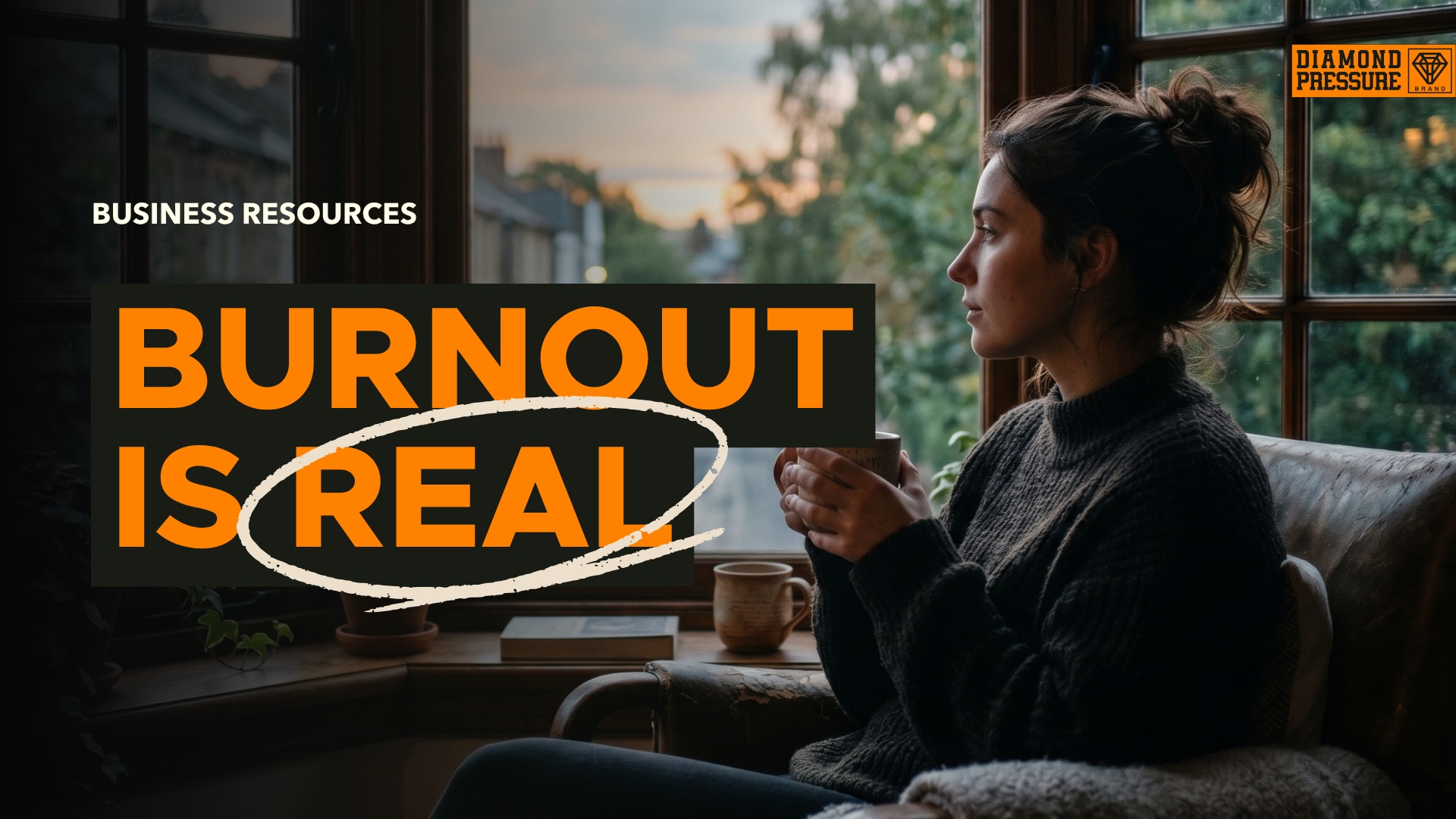
Social media usually shows the freedom and the wins. It rarely shows the interrupted sleep, the money worries, or the days when every decision comes back to one person.
A 2025 study cited in Fortune found that 87% of founders reported experiencing anxiety, depression, or burnout, or all three. Forty-five percent rated their mental health as "bad" or "very bad." Entrepreneurs are 50% more likely to report mental health conditions than the general population, yet only 23% seek professional support.
Many founders keep that weight private until it starts affecting their health, relationships, and judgment.
Burnout is not a character flaw. It is a signal that the way you are working is taking more than your body and mind can keep giving. Ignoring it only makes the eventual repair harder.
Here is how to recognize it early and respond before everything stops.
What Burnout Actually Looks Like for Founders
Burnout isn't just exhaustion. The World Health Organization defines it through three dimensions:
- Energy depletion or exhaustion: physical and emotional fatigue that sleep doesn't fix
- Mental distance from work: cynicism, detachment, loss of meaning in what used to matter
- Reduced professional efficacy. The sense that you're working harder and producing less
For entrepreneurs, it shows up differently than it does for employees. There's no manager to spot it. No HR to flag it. No clear "off the clock." It hides behind productivity. Behind another launch. Behind "I'll rest when this is done."
Researchers have a name for the version most founders experience: shadow burnout. A 2025 study of California startup executives found 73% experience persistent exhaustion, cynicism, and reduced efficacy hidden behind continued high performance. They look fine. They're hitting metrics. Inside, the engine is breaking.
If any of these describe you in the last 60 days, pay attention:
- Waking up tired even after a full night of sleep
- Irritability with people you love over things that wouldn't normally matter
- Loss of interest in the work that used to excite you
- Difficulty making decisions you used to make easily
- Physical symptoms: headaches, tension, gut issues, weight changes
- Numbness when you achieve something: no celebration, just the next thing
- Working longer hours but producing less
- Pulling away from friends, family, community
None of these mean you're failing. They mean your system needs maintenance. Hard seasons reveal what soft ones hide.
Why Founders Are at Higher Risk
Entrepreneurship creates a specific cocktail of stressors most jobs don't:
- Total responsibility. When you own it, nobody else does. Every problem is your problem.
- Financial uncertainty. Even successful founders carry months of cash anxiety. Inconsistent income hits the nervous system differently than a regular paycheck.
- Identity fusion. Your business and your self-worth get tangled. A bad sales month feels like a personal failure.
- Isolation. Even with a team, the founder seat is lonely. You can't fully share the weight with employees.
- No off switch. When the business is yours, work is always one notification away.
- Decision fatigue. Hundreds of small choices every day drain the same mental resource that big strategic thinking requires.
Stack those together for two or three years and burnout isn't a personal weakness. It's a predictable outcome of an unmanaged system.
Burnout is manageable, even if pressure is not always avoidable. Founders who last build a life that can absorb the weight, not just a business that creates it.
The 7 Pillars of Founder Resilience
1. Sleep Is a Business Strategy
Sleep deprivation drops cognitive function comparable to legal intoxication levels. You cannot make good decisions on five hours of sleep. You will spend hours fixing mistakes you made because you were too tired to think clearly.
Protect seven to eight hours. Build a wind-down routine. Stop working an hour before bed. Treat sleep like a non-negotiable meeting with your future self.
This isn't lifestyle advice. It's competitive strategy. Rested founders out-execute exhausted ones every time.
2. Move Every Day
Exercise is the most underrated mental health intervention available to founders. Thirty minutes of moderate activity, five days a week, produces measurable improvements in mood, focus, anxiety, and sleep quality.
You don't need a gym. You need consistency. Walk. Lift. Run. Swim. Move.
Treat it as part of the work, not separate from it. The hour you "lose" to exercise comes back in better decisions, sharper focus, and emotional regulation when something goes wrong, which it will.
3. Build a Real Support System
Loneliness is one of the highest-correlation risk factors for founder burnout. Harvard Business Review research links workplace loneliness directly to burnout severity.
You need people who get it. Not your spouse (who already carries enough). Not your employees (who can't be your therapists). Other founders. A peer group. A small group of three to five entrepreneurs you can be honest with about the hard parts.
Find them through industry communities, accelerators, masterminds, or paid groups like EO, YPO, or Hampton. The cost of a good peer group is the lowest-ROI expense you'll ever make on the surface, and the highest-return investment in actual founder longevity.
4. Separate Self-Worth From Business Performance
This is the hardest one.
Your business is not you. A bad month doesn't mean you're a bad founder. A good quarter doesn't mean you've figured life out. The faster you decouple your sense of self from your business metrics, the more resilient you become to the inevitable swings.
One practice: name three things you're proud of that have nothing to do with business. A relationship you've invested in. A skill you've built. A way you've shown up for someone. Do this weekly. Your identity needs more pillars than revenue.
5. Take Real Time Off
Most founders take vacations the way they run meetings. They bring the laptop, check email "just once," and come back more tired than when they left.
Real time off means: no email, no Slack, no metrics, no "quick check-in." The business will survive 72 hours without you. If it can't, you have a business that's too dependent on you, which is a separate problem worth solving.
Schedule it in advance. Communicate boundaries clearly. Have someone covering. Trust the system you built.
If you can't take three full days off without anxiety, that's information. Your business is the boss, and you're the employee who can't get out from under it.
6. Get Help When You Need It
Therapy. Coaching. Medication if your doctor recommends it. None of these make you weak. All of them make you durable.
Only 23% of founders seek professional psychological support. That's a problem the industry needs to fix. The founders who do seek support report measurable improvements in clarity, emotional regulation, and decision quality.
A good therapist can help you separate work stress from personal patterns. A good coach can help you build operating systems for your mind the way you build them for your business. Don't wait until you're in crisis. Build the relationship before you need it.
7. Build in Recovery, Not Just Performance
Athletes don't train at maximum intensity every day. They cycle: hard work, then recovery, then hard work again. Most founders run at 90% intensity 365 days a year and wonder why they break.
Build cycles into your year:
- Daily: one hour completely disconnected from work
- Weekly: one full day off the business
- Monthly: a weekend with no work
- Quarterly: 3-5 days off: real off
- Annually: at least one stretch of 7-10 days fully disconnected
This is not optional. This is what sustainable building looks like.
The Mindset That Matters
You will have hard seasons. Not might: will. The question isn't whether the pressure shows up. It's whether you've built the foundation to carry it.
The strongest founders aren't the ones who don't feel the weight. They're the ones who built lives that can hold weight without breaking. They sleep. They move. They have people. They take real time off. They get help when they need it. They refuse to wear exhaustion as a badge.
That's not weakness. That's strategy.
Pressure is part of the process. Burnout is what happens when you forget that pressure and recovery are supposed to alternate. The diamond doesn't form under constant pressure. It forms when the pressure is intense and the conditions are right.
Build the conditions. Then carry the pressure. Then build something that lasts.
When You're Already in It
If you're reading this in the middle of burnout, here's the move:
- Tell someone. A therapist, a doctor, a peer, a partner. The first move is breaking the isolation.
- Stop the bleeding. What's the one thing draining you most? Cut it or change it this week, not someday.
- Get baseline sleep, food, movement. Don't try to fix everything. Fix the body first. Mood follows.
- Reduce decisions. Simplify your week to the three things that actually matter. Defer the rest.
- Get professional support if symptoms persist. This isn't a phase to push through. It's a signal to address.
You can come back from burnout. Founders do it every day. But you don't come back by working harder. You come back by working smarter, resting better, and rebuilding the foundation that broke.
The pressure didn't break you. It revealed where the foundation needed to be stronger.
Now build it.
---
Keep Building
The strongest builders aren't the ones who never felt the pressure. They're the ones who learned how to carry it without losing themselves.
Diamond Pressure is built for entrepreneurs who refuse to quit when it gets hard, and refuse to break when it gets heavy. Join the Pressure List for founder notes, early drop access, and resources for the long road.
[Join the Pressure List →]