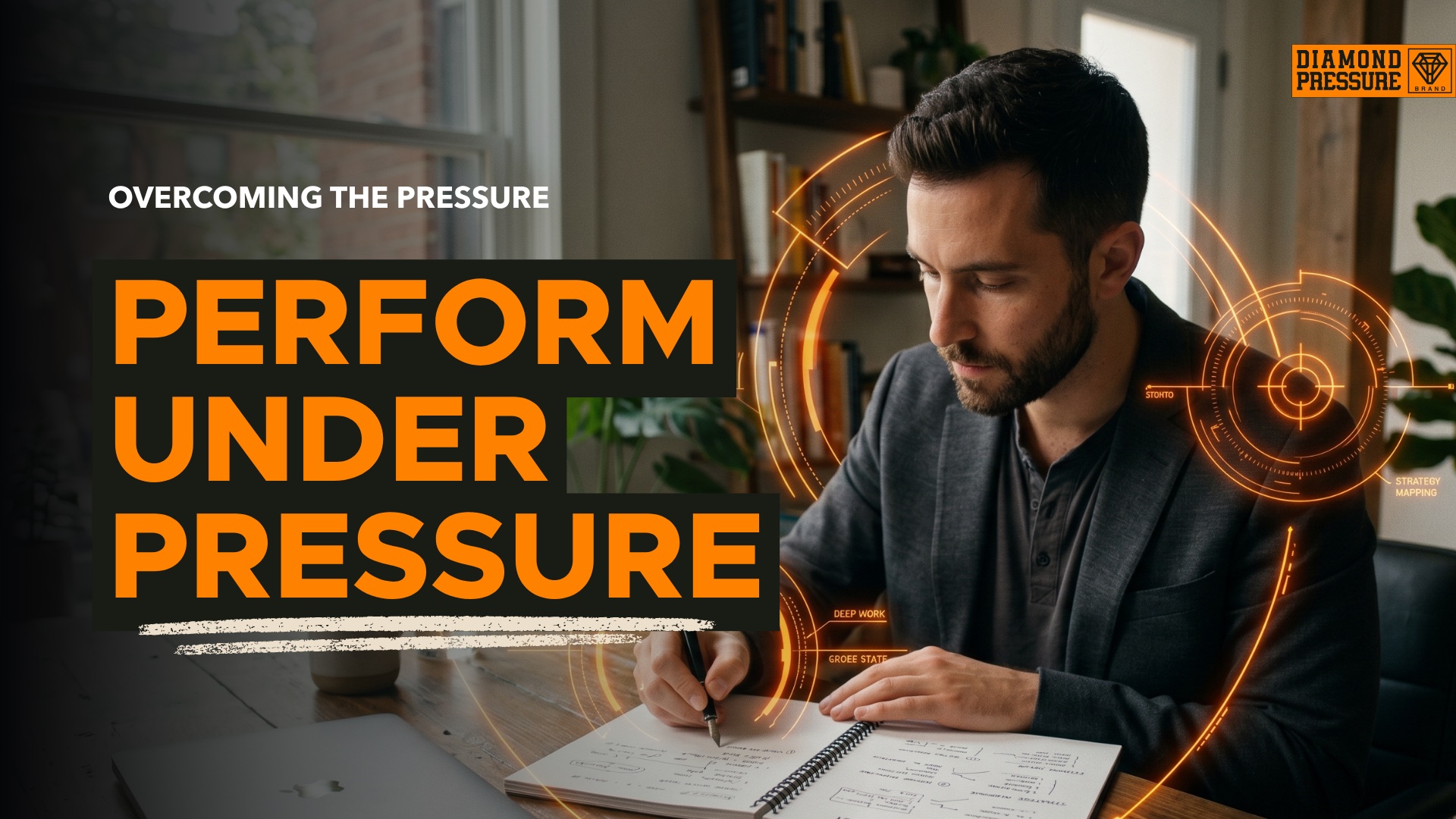
Sometimes the work clicks. Your attention settles, the next move feels clear, and an hour passes before you notice. That experience has a name: flow.
Athletes call it being in the zone. Researchers call it flow state. Neuroscience research shows that people operating in flow are up to five times more productive than their normal baseline, not because they're working harder, but because their brain is operating with a chemistry that enhances pattern recognition, creative problem-solving, and sustained attention all at once.
For someone carrying a lot of responsibility, focused work can create breathing room. It helps you finish meaningful tasks without stretching every job across an entire day.
Flow cannot be forced on command, but you can make it more likely by shaping the conditions around the work.
What Flow Actually Is (And Why It Matters Under Pressure)
Flow is a neurochemical state. When you enter it, your brain releases a specific cocktail, dopamine, norepinephrine, endorphins, and anandamide, that simultaneously enhances focus, pattern recognition, creative connections, and pain tolerance.
What that translates to for the work:
- Self-monitoring (the part of your brain that doubts and second-guesses) gets quieter
- Attention networks engage at maximum intensity on the task in front of you
- Time perception changes: hours can feel like minutes
- Decision-making accelerates without becoming reckless
- Creative connections happen that don't happen in normal cognitive states
The strongest case for pursuing flow under pressure isn't productivity. It's quality. The work done in flow is consistently rated higher than work done in fragmented attention. Founders close better deals, write better copy, design better products, and solve harder problems when they're in flow than when they're not.
The problem: modern work environments are engineered to prevent flow. Notifications, meetings, Slack, email, multitasking. The average knowledge worker is interrupted every three minutes and takes about 23 minutes to fully refocus. Most builders never actually reach flow because they're never given the runway to enter it.
If you want flow, you have to build for it.
The Conditions That Trigger Flow
Researchers have identified several specific triggers that reliably initiate flow states. The strongest:
1. The Challenge-Skill Ratio
Flow requires a task that sits roughly four percent above your current ability level. Hard enough to demand your full attention. Not so hard that it triggers anxiety and shuts you down.
If the work is too easy, you get bored. If it's too hard, you get overwhelmed. The flow zone is the narrow band where the challenge matches your skill, with just enough stretch to require everything you've got.
For builders, this means picking the right work for the right moment. The cold outbound sales calls when you're already low-energy will not produce flow. The strategic deep work on a hard problem when you're rested and focused will.
Calibrate the work to your current capacity. Aim for stretch, not destruction.
2. Clear Goals and Immediate Feedback
Flow requires you to know what success looks like for the task in front of you, and to get feedback as you work that tells you whether you're hitting it.
A vague goal like "work on the website today" rarely produces flow. A specific goal like "write the hero section copy that explains the brand promise in under 80 words" does, because you can immediately tell whether each sentence is moving toward or away from the target.
Before any deep work session, define:
- What specifically am I producing in this session?
- What does done look like?
- What's my feedback signal as I work?
Specificity is a flow trigger. Vagueness is a flow killer.
3. Complete Uninterrupted Focus
This is the one most builders skip, and it's the one that matters most.
Flow requires sustained attention long enough for the brain to drop into the state. Most research suggests it takes 15-25 minutes of focused work to enter flow. That means any interruption in the first half hour resets the clock.
The mathematics of distraction: if you're interrupted every three minutes (the average), you literally cannot enter flow. The neurological state requires runway you don't have if your phone is buzzing and Slack is open.
To create flow conditions:
- Phone in another room or fully silenced (airplane mode is best)
- All notifications off: desktop, email, messaging apps
- One tab, one document, one task
- Headphones with focus music or silence
- A defined block of time (90 minutes minimum, 2-4 hours ideal)
- Same time, same place, same ritual. Your brain learns the cue
The builders who consistently produce at high levels protect 10-20 hours per week of conditions like this. Most founders get zero.
4. Energy Management Over Time Management
Flow happens when your energy is high. It almost never happens when you're depleted.
The implication: schedule your most important work during your peak energy windows, even if the calendar pressure says otherwise. Most people peak in the late morning. Some peak late afternoon. A few are genuine night owls. Track your energy for two weeks and find your pattern.
Then protect those windows like the strategic asset they are. The two hours in your peak window are worth more than eight hours in your low-energy window. Operate accordingly.
5. The Right Pre-Flow Ritual
Flow is easier to enter when your brain has a learned cue that says "we're entering deep work now."
Build a ritual:
- A specific physical space you only use for deep work
- A consistent pre-work routine (coffee, walk, three minutes of breathing, music)
- A specific tool or notebook you only use for this work
- A consistent start time
The ritual isn't superstition. It's neurological priming. The brain associates the cues with the state, and the state becomes easier to access over time.
Performing in High-Pressure Moments
Flow isn't just for daily deep work. It's the state you want to access in the moments that matter most. The pitch, the negotiation, the launch, the high-stakes presentation.
The research on performing under acute pressure (athletes in competition, surgeons in surgery, performers on stage) shows consistent patterns:
Preparation that becomes automatic. When the moves are practiced enough to be automatic, the conscious mind is free to engage with novelty, energy, and presence. Under-prepared performers spend their pressure moments managing logistics. Well-prepared performers spend them managing energy.
Physiological state management. Breath work, specifically slow nasal exhales longer than inhales, measurably reduces sympathetic nervous system activation. Two minutes of 4-second inhale, 6-second exhale before a high-stakes moment shifts your nervous system into a calmer, more present state.
Reframing arousal. Research from Harvard Business School shows that performers who reframe pre-performance anxiety as "excitement" rather than fear perform measurably better. The physiology is similar: racing heart, heightened alertness. The interpretation determines the outcome.
Narrowing focus to the immediate next move. Under pressure, attention tends to broaden (everything feels important) or contract (tunnel vision). Flow performance lives in the middle: focused on the immediate action with peripheral awareness of context. "What's the next sentence I need to say" beats "what's the outcome of this whole meeting."
Rituals that signal readiness. Athletes have pre-game rituals for a reason. The brain associates the ritual with the performance state. Founders going into high-stakes moments benefit from a consistent pre-performance routine.
The Long View
Performing under pressure isn't about white-knuckling your way through hard moments. It's about engineering the conditions, daily and in the moment, that let your brain operate at its highest capacity when it matters.
The builders who consistently perform aren't the ones who push hardest. They're the ones who protect deep work, manage their energy, prepare deeply, and trust the conditions to produce the state.
Flow is a byproduct of the right inputs. Build the inputs, and the state shows up reliably.
Stay sharp under pressure. Engineer the conditions. Trust the work to take you there.
That's how high performance happens, not in spite of the pressure, but with it.
---
Keep Building
The strongest builders aren't the ones grinding the hardest. They're the ones who built the conditions for their best work to show up consistently.
Join the Pressure List for founder notes, drop early access, and resources for entrepreneurs building sustainably. Built for the long game.
[Join the Pressure List →]