
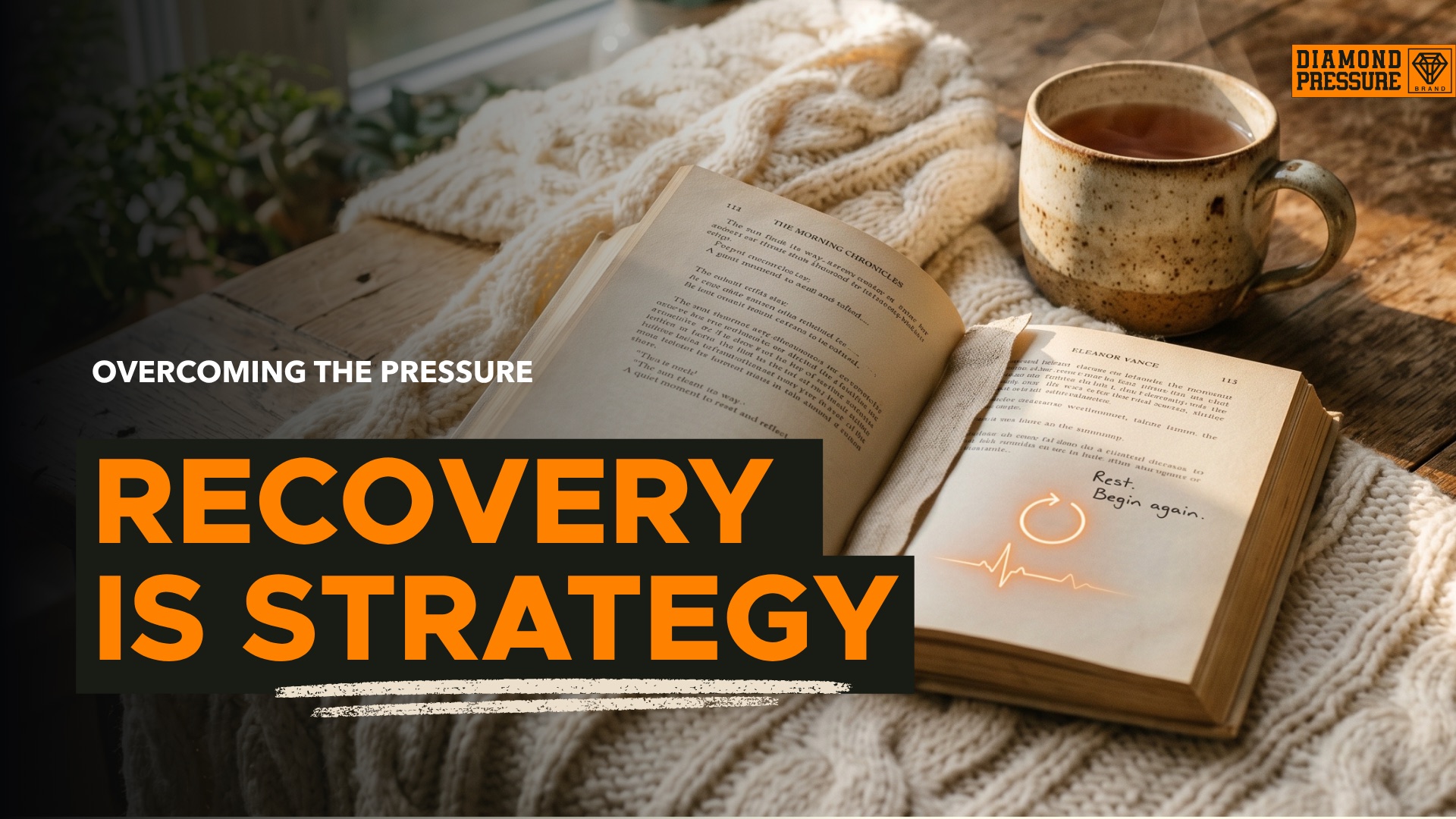
Many builders treat rest like a reward they can collect after the work is finished. The problem is that the work rarely feels finished.
Without planned recovery, long stretches of pressure start changing how you think, feel, and make decisions.
Rest is not the opposite of serious work. It is part of making serious work sustainable. Athletes plan recovery because the body needs it; founders and creators need the same honesty about their minds and nervous systems.
If you're carrying pressure and wondering why you keep breaking down, the answer is probably not that you need more grit. The answer is that you've been told a story about rest that the research doesn't support.
What Chronic Stress Actually Does to the Builder
In stress research, there's a concept called allostatic load. The cumulative biological cost of adapting to chronic stress. Every demand, every crisis, every late night, every cortisol spike adds to the total. Your body and brain can handle short bursts of high pressure. They cannot handle sustained pressure without recovery.
When allostatic load stays high for too long, the cost shows up in measurable ways:
- Weakened immune response and higher susceptibility to illness
- Structural changes in the brain: reductions in gray matter in the hippocampus, amygdala, and prefrontal cortex
- Impaired memory, focus, and decision-making
- Disrupted sleep cycles that make recovery harder over time
- Elevated risk of cardiovascular disease, metabolic disorders, and depression
This isn't motivational language. This is documented physiology. Chronic stress without recovery rewires your brain, weakens your body, and degrades the cognitive capacity you depend on to build.
The builder running on adrenaline at year three of a startup is not the same builder cognitively as the one who started. The damage is real. And it accelerates the longer recovery is postponed.
Why "Just Take a Day Off" Isn't Recovery
Here's what most founders don't realize: rest alone isn't recovery.
Recent research challenges the passive view of rest entirely. A 2026 review of stress research concluded that recovery from high allostatic load is not a passive process of "taking a break" but an active architecture of neural and physiological repair. To drain the stress tank, rest alone isn't enough. You need active, intentional disconnection from micro-stimuli.
Scrolling your phone for two hours on the couch is not recovery. Watching Netflix while answering Slack is not recovery. Taking a vacation where you check email three times a day is not recovery. Your nervous system can tell the difference between rest and pseudo-rest, even when you can't.
Real recovery has specific characteristics:
- Disconnection from work stimuli. No notifications. No checking. No "quick" responses.
- Engagement of different cognitive systems. Physical activity, creative work, social connection, nature: anything that uses different neural pathways than work.
- Restoration of physiological baseline. Sleep, hydration, movement, sunlight, food.
- Time long enough for parasympathetic activation. Your body needs sustained calm to drop into actual recovery mode. Five-minute breaks rarely do it.
The founders who recover well aren't just resting more. They're resting differently.
The 4 Layers of Strategic Recovery
The research points to recovery happening on four time scales. Most builders only think about one. The ones who stay sharp under pressure use all four.
1. Daily Recovery: The Sleep Foundation
Sleep is the single highest-leverage recovery tool available. Seven to nine hours, consistent timing, dark room, no screens for an hour before bed.
The math is brutal: cognitive performance after six hours of sleep is comparable to mild intoxication. After four nights of restricted sleep, the deficit compounds to severe impairment, and most people don't notice they're impaired. You make worse decisions, miss obvious patterns, and overreact emotionally without realizing the sleep loss is the cause.
If you treat any recovery tool as non-negotiable, treat sleep as the first one.
2. Weekly Recovery: The Full Day Off
One full day per week with zero work contact. No email. No Slack. No "just one quick thing." Twenty-four hours of real disconnection.
Most founders resist this. The business will burn down. The customer will be mad. The launch will slip. Almost never true. Most "urgent" things will wait 24 hours. The rare exception isn't worth eliminating a recovery practice that keeps you functional 52 weeks a year.
If a full day off feels impossible, that's information about your business: it's too dependent on you. Build systems that let you disappear for a day. Future you will thank present you.
3. Monthly Recovery: The Real Break
A long weekend per month: Friday through Sunday, fully disconnected. Get out of your normal environment if you can. Move your body. See people who don't talk about work. Engage in something that uses different parts of your brain.
The neuroscience: extended breaks allow the brain's default mode network to activate, which is where creative insights, pattern recognition, and strategic clarity actually emerge. The breakthrough idea almost never comes during the grind. It comes when the grind stops and the brain finally has space to make connections.
You aren't being unproductive when you rest. You're producing the cognitive capacity that makes future productivity possible.
4. Annual Recovery: The Deep Reset
At least one stretch per year of seven to ten days fully off. Real off. Out of your normal environment. No checking. No client calls "just in case." A deep reset.
The strongest founders treat this like a non-negotiable annual ritual, not a luxury. It's where allostatic load actually gets reset to baseline. It's where the body's repair systems fully activate. It's where you remember who you are outside the business.
Skip this and you're slowly accumulating damage that no weekend can undo.
Recovery Practices That Actually Work
The research is consistent on what produces measurable recovery:
- Sleep. Most important, most underrated
- Cardiovascular exercise: 30+ minutes most days
- Time in nature, even short walks outdoors reduce cortisol measurably
- Meditation and mindfulness practices: 10-20 minutes daily produces real changes in stress response over 8-12 weeks
- Social connection with people who aren't part of your work: measurable reductions in stress markers
- Cognitive behavioral therapy and structured psychological support: strongest evidence in clinical research for reducing allostatic load
- Creative engagement outside work: music, art, hobbies that aren't monetized
- Strength training and resistance exercise: improves stress tolerance and sleep quality
What doesn't recover you despite feeling like it does:
- Alcohol (impairs sleep architecture, increases anxiety long-term)
- Doomscrolling (elevates cortisol, fragments attention)
- "Productive" hobbies that turn into more work
- Vacations where you stay connected to work
- Sleep when it's broken or short
The pattern: real recovery is active, intentional, and protected. Pseudo-recovery is passive, distracted, and interrupted.
The Mindset Shift
The builders who outlast the cycle stop framing rest as the opposite of work. They start framing it as part of the work.
The athlete doesn't train at max intensity 365 days a year. The musician doesn't perform without breaks for vocal recovery. The surgeon doesn't operate when they're cognitively impaired. Why would the founder, whose primary tool is their mind, treat their cognitive recovery as optional?
Rest is not the reward for finishing the work. Rest is what makes the work possible.
The strongest builders aren't the ones who never rest. They're the ones who built rest into the system so deeply that they can carry pressure without breaking.
Stay sharp under pressure. Recover with the same intention you bring to building. Treat your rest like the strategic asset it actually is.
That's how you stay in the game long enough for the pressure to shape you instead of break you.
---
Keep Building
Recovery is part of the formula. So is everything else.
Join the Pressure List for founder notes, drop early access, and real resources for builders in it for the long road. Built through the hard seasons.
[Join the Pressure List →]